Practical Travel Guide
Transport, payments, weather and personal advice to help you prepare and enjoy your visit.

What would you like to know?
Click a heading to open its information.
01From the Airport to Your Hotel
Train from Schiphol
The railway station is below the terminal. Follow the train signs to Schiphol Plaza. The journey to Amsterdam Centraal takes about 17 minutes. Depending on your hotel address, another station or a connection by tram or metro may suit you better.
Buy your ticket or arrange your payment before going down to the platforms. Use the yellow ticket machines upstairs or the NS website or app. With a supported bank card or phone using OVpay, you do not need a separate ticket: check in at a yellow reader before going downstairs.
Check out at your destination with exactly the same card or device. A physical card and its mobile-wallet version count as different payment methods. Each traveller needs their own ticket or payment method. Follow the instructions provided with paper or digital tickets.
Check the departure board for your destination, departure time and platform. Services may change at night, at weekends or during engineering works.
Bus 397: Amsterdam Airport Express
This is useful for Museumplein, the Rijksmuseum and Leidseplein. The journey takes around 30–40 minutes, depending on traffic. It does not go to Amsterdam Centraal.
The stops are outside Schiphol Plaza. Follow the signs for the current location. Buy a ticket in advance or pay the driver by card; supported contactless check-in and check-out is also available. Do not rely on cash. Night bus N97 runs less frequently, so check your exact route and departure.
A standard GVB ticket does not automatically include NS airport trains or bus 397. Combined tickets are available, but check their coverage before buying.
A pre-booked driver, Uber or Bolt
When booking a driver, confirm the price, vehicle and meeting point. Provide your flight number, passenger count and luggage details. Check child-seat arrangements and the terms for delays and waiting time.
With Uber or Bolt, check the app for availability, fare and a vehicle with enough space. Follow its directions to the designated App Pick-up area, which may involve a walk.
02Getting Around Amsterdam
Central Amsterdam is compact, and many sights are within walking distance of each other. For longer journeys, use GVB trams, metro and buses.
How to pay
OVpay lets you use a supported debit or credit card, phone or smartwatch for ordinary pay-as-you-go journeys, without registration or a separate ticket.
- On trams and buses, check in when boarding and out when leaving, including when changing vehicles.
- On the metro, use the station gates or readers.
- Use exactly the same card or device in and out. Remove your card from your wallet before tapping.
- Each traveller needs their own payment method or ticket.
Hour, day and multi-day tickets
If you plan frequent journeys, compare day or multi-day tickets with pay-as-you-go fares. Check when validity begins. Passes also need to be validated according to their instructions.
GVB tickets cover GVB services and do not automatically include NS trains, other operators or airport travel. Buy tickets through the app, machines or service points. Some tram conductors sell certain tickets, but do not assume every vehicle sells them. Do not rely on cash.
Before boarding
Use GVB or 9292 to check the line number, direction and stop. The same line number runs in both directions. Check your return journey too, especially at night, at weekends or during works.
Forgot to check out? An extra charge may apply. Check OVpay or the operator’s instructions for correcting the journey.
03Money & Payments
The currency in the Netherlands is the euro. Card and mobile payments are very common, but keep a little cash as a backup.
Visa and Mastercard are accepted in many places. Check ahead if you rely on American Express or Diners. Apple Pay and Google Pay are also common, depending on the linked card and the business’s acceptance policy. Make sure you know your card’s PIN.
PIN ONLY means card payments only, with no cash accepted. It does not necessarily mean you must enter a PIN for every payment.
Which banknotes should you bring?
Do not bring €200 or €500 notes. They are almost never accepted. Some places accept €100 notes for larger purchases but may refuse them for a small bill. Bring €5, €10, €20 and €50 notes instead.
Check signs in shops and supermarkets. Some cafés and restaurants are card-only, so ask before ordering if you want to use cash. Market stalls vary: some take cards and others prefer cash. Small notes and coins can be useful.
04Tipping in Restaurants & Cafés
Tipping is optional in the Netherlands. It is a gesture of appreciation for good service.
If you are happy with the service, you can leave around 5–10% or simply round up the bill. For example, you could pay €50 on a €47 bill.
How to leave a tip
- Leave cash on the table or give it directly to the staff.
- When paying by card, ask to add the tip before the payment is processed.
05Cycling in the City
Bicycles are part of everyday life in Amsterdam, but the busy centre can be challenging for inexperienced riders. Watch for other cyclists, pedestrians, cars and trams.
Renting and locking
Rental shops are found throughout the city, including near Centraal Station, Dam Square and Leidseplein. Check the fit, brakes, locks, rental terms and theft policy.
Bike theft is common. Lock your bike at every stop, even for a few minutes, following the rental company’s instructions.
Where to park
Follow local signs and use racks and designated areas where required. Incorrectly parked bikes may be removed. Large bicycle parking facilities, some underground, are available near stations and central locations.
06Parking & Park and Ride
Parking in central Amsterdam is expensive, and street spaces are limited. If you arrive by car, check whether your accommodation offers parking and what it costs.
Park outside the centre and continue by public transport
P+R facilities offer discounted parking subject to specific conditions. Public transport is paid separately.
- Sloterdijk in the west
- Noord in the north
- Olympisch Stadion in the south
- Zeeburg in the east
- Johan Cruijff ArenA in the southeast
Check before parking
The discount is not automatic. Under the standard arrangement, travel to the designated city-centre zone and back with an eligible public-transport ticket. Your final check-in or transfer on the return journey must be in that zone. Pay for parking within one hour of checking out on your return.
Ordinary OVpay payments generally do not qualify for the P+R discount, apart from the Sloterdijk arrangement. Check the current conditions and accepted transport tickets for your chosen facility.
Also check availability, vehicle height, maximum stay, events and any separate P+R entrance.
07Weather & What to Pack
Dutch weather can change within the same day. Dress in layers, and remember that wind can make it feel colder.
Spring: March–May
Average daytime highs rise from about 10°C in March to 18°C in May. Mornings and evenings are colder. Pack long sleeves, a sweater or fleece, a light waterproof jacket and closed shoes.
Summer: June–August
Average daytime highs are around 20–23°C. Expect some cool, wet days as well as hot spells reaching 25–30°C or more. Bring light clothes, an extra layer for evenings and a light waterproof jacket.
Autumn: September–November
Average daytime highs fall from around 19°C in September to 15°C in October and 10°C in November. Mornings and evenings are colder, with wind and rain at times. Pack long sleeves, layers, a sweater, a coat and water-resistant shoes.
Winter: December–February
Average daytime highs are around 6–7°C, with possible frost at night. Wind and damp weather make it feel colder. Bring a warm windproof and waterproof coat, layers, warm socks, a scarf, gloves and a hat or ear warmers. Thermal clothing can help if you spend long periods outdoors.
08Tap Water: No Need to Buy Bottled Water
Amsterdam’s tap water is safe to drink and of high quality. Fill a bottle at your hotel or apartment; there is no need to buy bottled water every day.
Water in restaurants and cafés
If you order water, you will usually be served bottled water for a charge. Check the price and bottle size before ordering, as restaurant water can be expensive.
If you want tap water, ask for it specifically. Not every venue serves it, and it is worth asking whether there is a charge.
09Where to Shop: My Supermarket Tip
Small convenience stores and tourist-area mini-markets can be significantly more expensive. For drinks, snacks and groceries, I recommend a larger regular supermarket from a familiar chain, such as Albert Heijn. If you still prefer bottled water, buy it there too.
Albert Heijn branches in central Amsterdam
| Area | Amsterdam address |
|---|---|
| Dam, behind the Royal Palace | Nieuwezijds Voorburgwal 226 |
| Waterlooplein | Jodenbreestraat 21 |
| Nieuwmarkt | Nieuwmarkt 18 |
| Near Prinsengracht | Vijzelstraat 113 |
Check opening hours before visiting, especially on holidays.
10Alcohol in Public Spaces
Some areas of Amsterdam prohibit drinking alcohol in public. Carrying an open bottle, can or glass containing alcohol in these zones may also result in a fine.
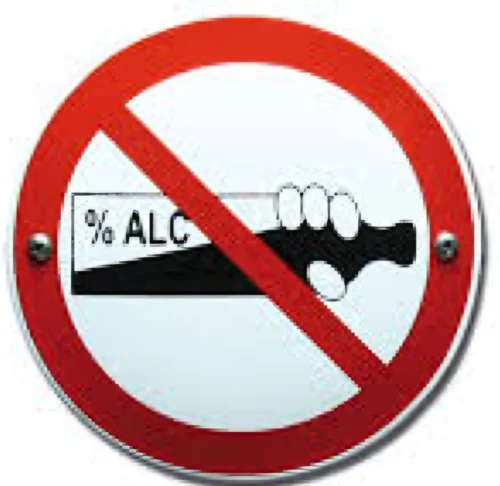
Before sitting in a street, square or park, check whether you are in an alcohol-free zone. Look for a sign with a bottle and 0%, or the word Alcoholverbod.
The restriction applies to the whole designated zone, not just beside the sign. Signs may be placed at entrances to the area.
You must be 18 or over to buy and drink alcohol. Carry valid ID.
11Smoking & Coffeeshops
Tobacco and cannabis have different rules, so it helps to distinguish between them.
Tobacco and vaping
Smoking is prohibited indoors in cafés, restaurants, public buildings and on public transport. At your hotel, check the property’s policy too.
Outdoor smoking is generally permitted, with exceptions such as stations, school grounds and smoke-free areas. Check the rules on terraces as well. A crossed-out cigarette or Roken verboden means no smoking.
Cannabis and coffeeshops
A coffeeshop sells small quantities of cannabis under specific conditions within the Dutch tolerance policy. It is not an ordinary café. Entry is for adults aged 18 and over with valid ID.
Smoking in streets and parks is possible where no local restriction applies, while being considerate of others. Certain areas, including parts of De Wallen, the Red Light District, prohibit smoking cannabis in public.
Recognising the signs
Look for Verboden te blowen, Blowverbod, or a joint symbol with a red line, sometimes alongside a leaf or a person smoking. The pictures here show examples to help you recognise the signs.
Tobacco cannot be smoked indoors in coffeeshops, including when mixed with cannabis. Some venues offer a tobacco-free herbal mix. Ask the staff about their rules and where smoking is permitted.
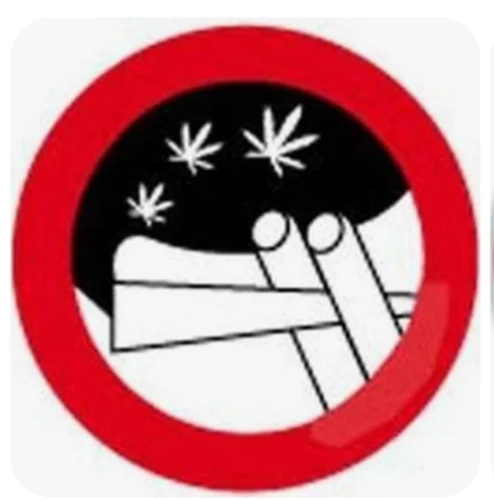
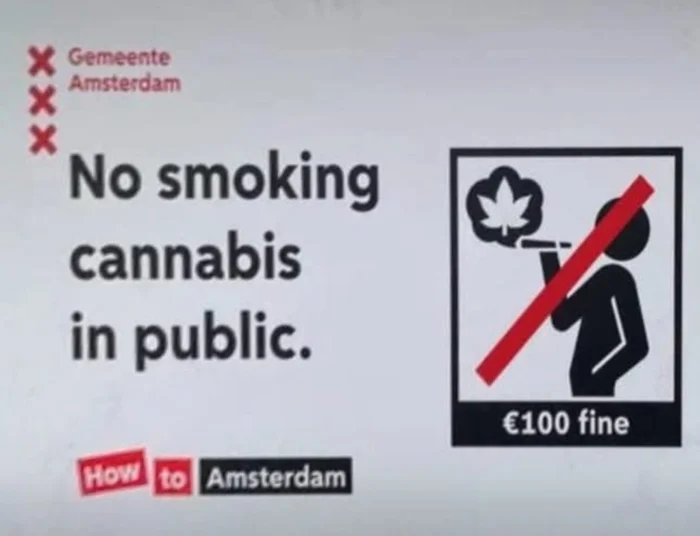
This image is a sign-recognition example. The fine shown may change.
12Three Small Reminders
Bike lanes are not pavements
Do not walk or stand in bicycle lanes. Look both ways and watch for cyclists before crossing.
Taking a bridge photo? Leave room to pass
Stand to the side so pedestrians and cyclists can get through.
The line number is only part of the journey
Before boarding public transport, check the direction and the stop where you need to get off.